

For every London property, an Electrical Installation Condition Report (EICR) is an important safety evaluation. Knowing what an EICR entails is critical whether you own a property, a business, or rent it out to keep your electrical systems dependable, compliant, and safe.
What Is An EICR?
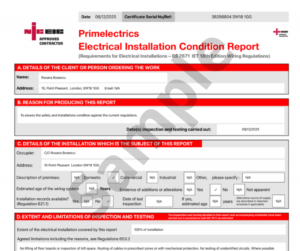
Usually known as an electrical safety certificate, an EICR is a formal record generated following a skilled electrician’s examination and tests the permanent electrical systems in a house. This involves:
- Hidden cabling inside walls, ceilings, and floors.
- Consumer Unit (Fuse Box): The core of your electrical network.
- Built-in smoke/fire sensors, hard-wired heaters, and permanent lighting fixtures are examples of fixed electrical equipment.
- Accessories include earthing/bonding links, light switches, and sockets.
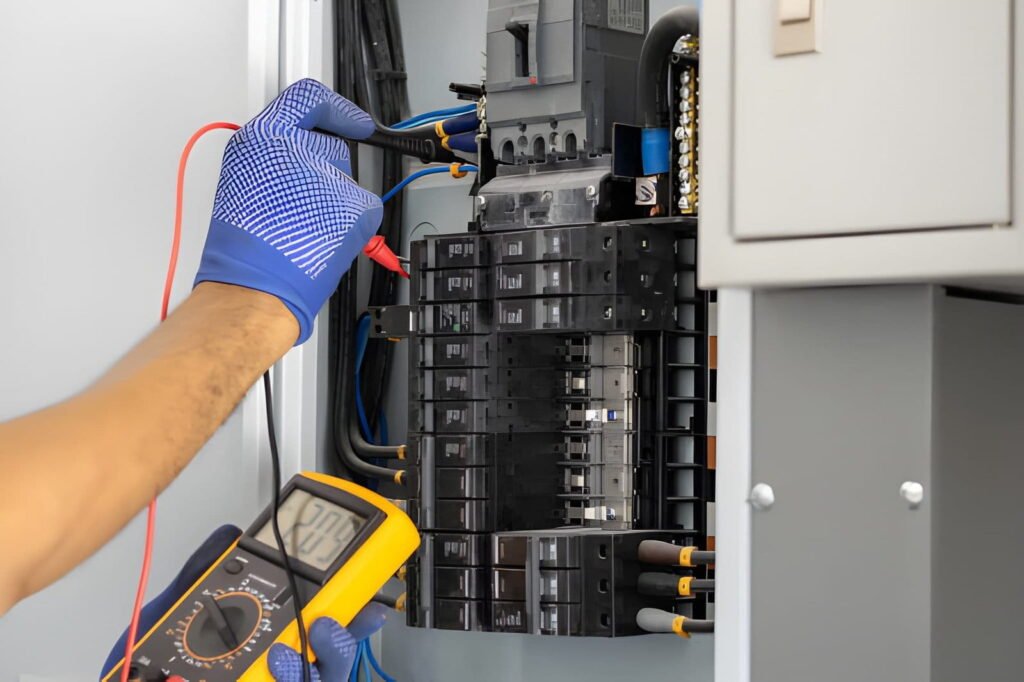
Why Is an EICR Necessary?
- Safety: It locates concealed hazards like faulty wiring, overheating signs, or worn components that might lead to electric shocks or fires.
- Legal Alignment: Landlords of private rental properties in England are legally obligated to have an EICR performed at least every five years (or upon change of tenancy). Failure to follow might have severe penalties of up to £30,000.
- Peace of Mind: For homeowners, a report offers assurance that your home is electrically safe and helps pinpoint problems before they become costly or dangerous, even if not legally required.
- Insurance and Property Value: Insurance companies and potential purchasers often ask for current reports proving that you have proactively kept the property safe.
Understanding the Report Findings
During an inspection, the electrician looks at your wires, sockets, and fuse box. If they find a problem, they assign it a code. These codes tell you exactly how much danger is present and how fast you need to act.
Code C1: Danger Present
A C1 code is the most serious result you can get. It means there is a “Danger Present” right now. This usually involves exposed live wires or a fault that could cause an immediate electric shock.
- Action Required: You must take immediate action. The electrician will often fix the issue on the spot or turn off the power to that circuit to keep everyone safe. Because there is a high risk of injury, this cannot be ignored even for an hour.
Code C2: Potentially Dangerous
A C2 code means the system is “Potentially Dangerous.” While it might not hurt someone this very second, a single small fault or a change in weather could make it deadly. This is common with poor earthing or sockets that are starting to melt.
- Action Required: You need urgent remedial action. For landlords in London, this must usually be fixed within 28 days to stay compliant with safety laws and keep your insurance valid.
Code C3: Improvement Recommended
If your report shows a C3 code, it means “Improvement Recommended.” This usually happens when your wiring is a bit old and doesn’t meet the newest 2026 safety standards, but it isn’t actually broken.
- Action Required: You are not in immediate danger, and upgrades are simply advised. You don’t have to fix these to pass your EICR, but doing so is a smart strategy to prevent bigger repair bills in the future.
Code FI: Further Investigation Required
The FI code means Further Investigation Needed. The electrician uses this when he or she notices something suspicious but lacks full vision without cutting through a wall or raising floorboards. It suggests there is an unidentified circumstance deserving of further attention.
Need for Action: You must set up a follow-up visit right away. Your building cannot be marked as safe until the electrician is fully informed as to what is going on.
Usually, within 28 days for landlords, you have to do the required corrective work and get written proof that the standards are now fulfilled if a report is flagged unsatisfactory (due to C1, C2, or FI codes).
The Inspection Process
Designed to be non-disruptive, the approach is systematic and guarantees full safety:
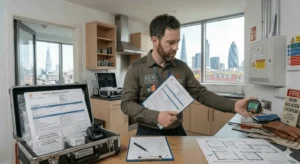
- Visual Inspection: Searching for apparent indicators of damage, use, or bad DIY modifications.
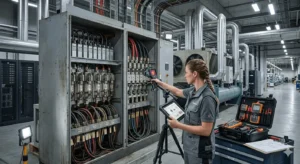
- To guarantee the system responds appropriately to failures, use professional equipment to execute dead tests (when the power is off, such as insulation resistance and continuity) and live tests (like polarity and RCD trip testing).
- Documentation: Offering a thorough description of the status of the system and any required actions.
Inspection frequency
- Rental Properties: Every five years (or at a tenancy change).
- Homeowners should be recommended every ten years.
- Companies: Recommended at least every five years, but high-risk conditions might need yearly inspections.
How to Stay Compliant in London
Always employ a qualified and competent individual to guarantee the validity of your EICR. To guarantee the electrician meets the exacting requirements for compliance and safety, make sure they are registered with a respectable programme such as NICEIC or NAPIT. As they are essential for your legal and insurance records, make sure during booking that the service covers both the inspection and the official report distribution.